‘Weave App’ – new way to search for a job

weave app

Swipe to get some networking face time

The Tinder app has unquestionably revolutionised the concept of online dating with its swipe-to-like interface. However, if you’re a more career-focused smartphone user you may want to check out Weave.

The new iOS and Android app for professionals allows users to log in through their LinkedIn accounts and see a list of nearby people who’re willing to meet up for face-to-face networking meetings.

When users encounter a profile, they simply swipe ‘yes’ or ‘no’ to register interest; just like Tinder. Swiping right for yes will enable the chat portion of the app where meetings can be arranged.

According to the makers of Weave, 100 people are day are already meeting through the application, which launched in January for iOS and a month later for Android.

Five Arrested Over Fake Government Websites

fake government websites
Five people have been arrested over fake Government websites created to con people out of money.

People trying to order official documents such as passports and car tax discs have fallen victim to fraudsters who have mocked up sites.

Almost 6,000 complaints about the sites have been made to Citizens Advice – now five people have been arrested under the Fraud Act and consumer protection laws.

They are now on police bail.

Lord Harris, chairman of the National Trading Standards Board (NTSB), said his team is “making it as difficult as possible for these online hoaxers to operate”.

Lord Harris said: “We have been working with search engines such as Google and Bing to remove adverts from online search results and we continue to gather intelligence across the country to help tackle this issue.

“We urge you to avoid unofficial websites which could leave you out of pocket or at risk of identity theft. Only use the GOV.UK website to find Government services. If you come across copycat websites, report them to Citizens Advice.”

The fraudsters use URLs with words such as govuk and directgov in them, to appear similar to the official sites.

Martin Lewis, creator of the consumer financial advice site MoneySavingExpert, urged people to go directly to the official Government site, rather than using search engines.

He said: “Copycat websites disguise themselves as the real thing, but charge you for a useless service. I’ve lost count of the number of people who contact me upset and want to know how to get their cash back.”

Consumer Affairs minister Jo Swinson said: “It’s great that it’s becoming easier and more common to use the internet to order official documents such as passports or tax discs, but people should be aware of rogue websites that are out there trying to exploit them.”

Protect yourselves against Malware known as GOZeuS and Cryptolocker.

The National Crime Agency (NCA) are continuing to take action against this attack and have temporarily taken control of the communications used to connect with infected computers, but expects only a very limited window of opportunity to ensure you are protected

These pieces of malware could potentially cause serious damage to your personal or business data and we are advising customers to take precautions in protecting themselves against these applications.

* Ensure your system software is up-to-date
* Make sure your internet security software (including Anti-virus, Anti-malware and firewall software) is up-to-date
* View emails with attachments sent from unknown senders with caution
* Take care to look out for Phishing emails
* Avoid storing passwords on your computer
* Make sure you keep backups of your work in another location in case the worst happens

More information about the malware can be found at https://www.getsafeonline.org/nca/

What do Lego and Web Development have in Common?

Article by John Reeve

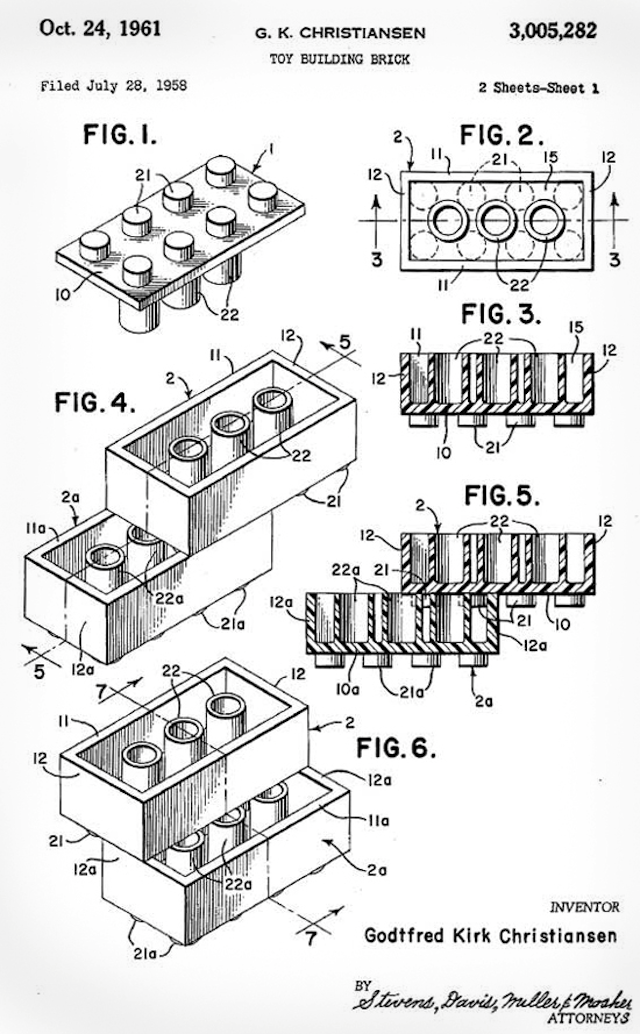
Godtfred Kirk Christiansen patented the Lego brick in 1958. Such a simple concept would go on to define the toy industry, and most of our childhoods. I was, and still am, a Lego fanatic. Playing with Lego contributed heavily to my working in Web development.

Now that I have two boys who also love Lego, the bins are down from the garage and new creations are hatching from our collective minds every day. It got me thinking, wow, there are a lot of parallels between what I do as a Web developer and Lego. Here are some thoughts on how playing with Lego is a lot like developing for the Web.

Develop using basic building blocks

lego-original-patent

The Lego brick is a very simple concept, from which stems every Lego piece in existence today. It’s a lot like a programming language with basic loops and conditional constructs, from which stems frameworks and libraries. Reusable code can be assembled in an infinite number of variations, morphing into web sites and web-based applications.

The Basic Lego BrickWe rarely see the humble Lego brick in the spotlight, but we parade clever Lego creations through the Internet. When we develop for the web it about the types of bricks we are using β€” PHP, Python, or Ruby. We celebrate the end results, the beautifully developed web sites and web-based applications we use in our day-to-day.

Develop anything you want β€” simple or complex

basic-lego-brick

Us Web developers can create anything we want with just a computer and our fingertips. Just like Lego, we can develop something basic and simple, like an online to-do list / task manager. Or, we can develop more advanced web-based applications to help manage complex problems. There is no limit to what we can build with Lego bricks or develop with web-based programming languages.

Lego bricks have been used to build everything from squat and square cars to four-wheel drive trucks with independent suspension. The specific details depend on the developer and what they are trying to accomplish.